Friday, February 28, 2020

Historic Homes of America: The Crane Estate

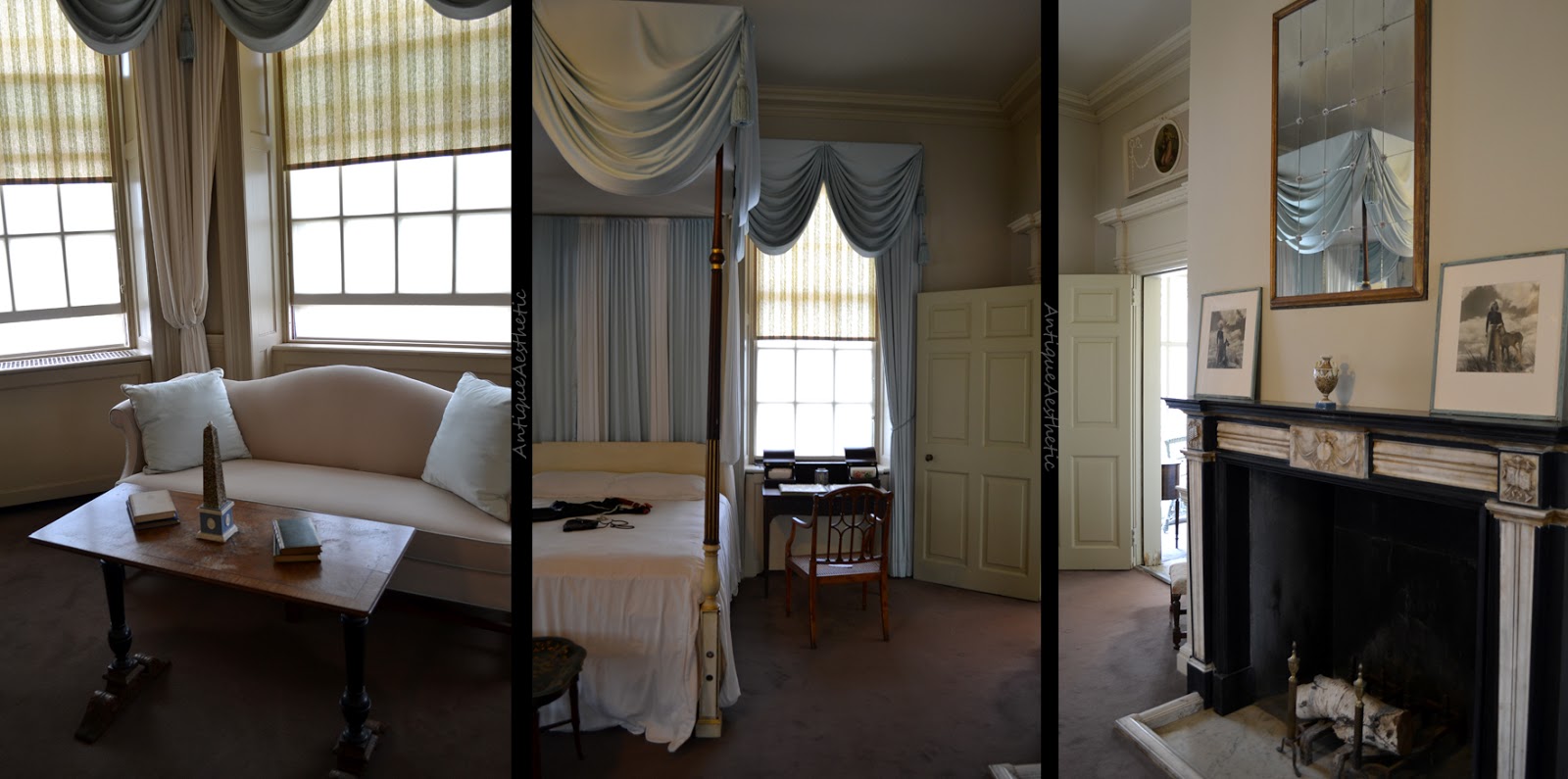
  The Crane Estate, located in Ipswich, Massachusetts, was the summer home of Richard T. Crane, Jr., son of the founder(with the same name) of R.T. Crane & Bro. which later became the Crane Company.  Richard Jr. purchased the property in 1910, and built the first version of the house as well as the gardens in 1912.  It was then torn down in 1924 and was finished being rebuilt in 1928, which is the home that stands now.  David Adler designed the home in a 17th Century Stuart style, with the gardens having remained unchanged, designed by the Olmstead Brothers.  Richard Jr. married Florence Higinbotham in 1904, and they had two children, Florence and Cornelius. Richard Jr. was a member of the Jekyll Island Club, which was a prestigious club with members of the Vanderbilt, Astor, Rockefeller, and other wealthy families.  The Crane Company still exists today, but the house and its grounds are owned by The Trustees of Reservations, who received the property after the death of Richard Jr.'s wife in 1949.


My visit to the Crane Estate corresponded with the Roaring Twenties Lawn Party held there every year, so I was only able to get one shot of the outside.


Further Research:
Crane Co. - History
Trustees of Reservations: Crane Family Collection
Wikipedia: Castle Hill(the grounds of the house)
Trustees of Resrvations: Castle Hill on the Crane Estate

Friday, January 17, 2020

Ephemera: Writings of the Past II


  During my birthday antiquing trip I found some amazing antique postcards that I just had to add to my collection.
(As before, I'll copy them as close as I can, and will put question marks next to unsure words.)


Who Is Going To Blow?.-

Posted Nov 1, 1916
Mildred Johnston
Donellson, Ill.
We are all well.  tell Larence we do not want the turnips we got here at home.
from Ma.


When you play for me so sweet,
I'm completely at your feet.

Posted Mar 5, 1910
Miss Florence Arnsmeyer
425. Lake Ave.
St. Louis, Mo
Dear Friend
Recieved you card was very glad to hear from you.
I guess you had a good time Sunday by Ida.  Flora ask Lillie why she didn't anser my card.
from your Friend
Emma
ans soon


-What's The Use-

No postmark
Mr. C(?). H. Rudluff(?)
70 Post -Master
New York, N.Y.
Came home yesterday want to go back again but the Dr. wants me to stay here for a while, so it don't look like I will get to go.  we are a(?) going(?) ___(?) to the hospital this afternoon
will write you to-night if nothing happens
E(?). A. W(?).
U.S.S. North Dakota


Birthday Greetings

No postmark
Mrs. Nesbitt
Attica __(?), N.Y.
(Inside)
To Mrs. Nesbitt
From Mrs. Johnson
732 - 6th RN.(?)


Friday, November 15, 2019

Flippin' Through: Ideas About Hair Dressing by Pro-phy-lac-tic c.1923

  Today's 'Flipping Through' is a little bit different.  Instead of a traditional magazine I found a small booklet titled Ideas About Hair Dressing, which is a sort of advertisement and instructional book in one by the brand Pro-phy-lac-tic.  There is no date in the book, but based on this brand's advertisements in archived magazines and the hairstyles shown it appears to be circa 1923*.


Mansir Printing Company
Holyoke, Mass.


Further Research:
McCall's, January 1923: Pro-phy-lac-tic Brush Advertisement
*This book is shown in the advertisement above, which I didn't notice at first!

Friday, October 25, 2019

For The Love Of Vintage Plastics: Bakelite

  I should have known that my growing interest in all things vintage and antique would lead me to one of the most popular collectibles among men and women alike - Bakelite.  Bakelite is the candy of the plastic world, from its bright rainbow bangles to psychedelic swirled radios, anything and everything was once made from Bakelite.


  With the decreased use of celluloid because of its explosive nature, there was room for improvement as well as the need for a plastic that was not dependent on natural resources.  The miracle came from chemist Leo Baekeland in 1907, who was successful in creating the first completely synthetic plastic, a thermosetting phenol formaldehyde resin to which he named Bakelite.  Not only was it completely man-made, it was cheap and heat resistant, much unlike its predecessor celluloid.  These properties made Bakelite the primary plastic from 1909-1950s.  Its heat resistance made it popular in electrical devices like telephones, radios, switches, and sewing machine feet, as well as gaining favor in the fashion world for its versatility as Art Deco jewelry, buttons, and belt buckles. It was used in plates, cutlery, children's toys, cameras, smoking paraphernalia, the list goes on.

Advertisement, 1938.
(source)

Advertising booklet showing the variety of Bakelite products from 1941.

  Bakelite is known as a type of plastic, but it is also a brand(that later branched out into other plastics as is seen in the photo above).  Another brand called Catalin from the American Catalin Corporation acquired the patent for Baekeland's formaldehyde resin in 1927 and made their own version with less and differing fillers.  The belief is widely held that true Bakelite was only made in dark colors like brown, black, and deep red, and that any other color is actually Catalin.  Some advertisements from the time seem to suggest otherwise, but it is safe to say that both Bakelite and Catalin are formaldehyde resins that hold their value as well as their collectible status, and both terms are now mostly used interchangeably.

 Bakelite color chart.  From Gifts to Treasure, Embed Art Company catalog, 1924.

Another Bakelite color chart, unknown date and source. 

  Even though Bakelite seemed like a miracle, it too had its downfall.  Unlike the obvious problems that came from celluloid, Bakelite's issue was subtle but just as dangerous, that being the formaldehyde used in its production.  Formaldehyde, the same chemical used in the embalming process, has cancer causing properties.  These cancer causing agents can leech from the Bakelite through repeated exposure(as well as affecting those in the production of the material), and seeing that this was used in items like crib toys and kitchen utensils, the Bakelite boom only lasted until around the 1950s-1960s when safer plastics were created.  Bakelite is still used in some industries today, but the household items are a thing of the past.

  I have been familiar with Bakelite almost as long as I've been familiar with celluloid, but it was only when I became interested in Art Deco and the 1930s did I want to add some pieces to my collection.  Of the vintage plastics, Bakelite and Catalin are the most popular and valuable, which means I haven't been able to afford many pieces, but the pieces I do own I treasure, and I will detail them in a coming post.


Further Research:
Wikipedia: Bakelite
Wikipedia: Catalin
Hexion: Bakelite-Resins (uses today)

Friday, September 20, 2019

Making a c.1923 Butterick Dress: The Reveal

  And here it is!  After two and a half weeks of work I finished Butterick 6962 circa 1923 open front dress with slip.

View of the front with all the accessories(including a matching band for my hat with a buckle).

View of the back - the belt slipped a bit so the spot where I tacked the pleats is visible.  I was so worried the pleats would just disappear when I took out the basting stitches, but was pleasantly surprised to see they still mostly hold their shape.

Color details.

Back collar detail.

Sleeve and front detail.

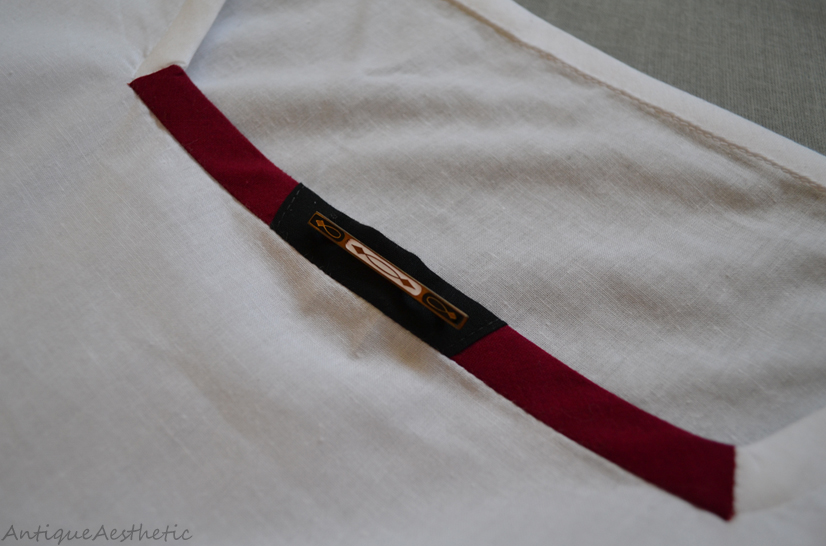
Front of slip neckline detail with brooch.

The things I've learned:
1) Tailor's tacks are both good and bad - they mark both pieces of fabric without needing to be washed out or risking staining the fabric, and using multiple colors instantly tells me what mark means what, but they are somewhat time consuming to put in and have the potential to fall out which can be annoying.
2) Pleats are only good in small doses - I used to prefer pleats to gathers, but these dress-length pleats were the devil to get even and to stay in place, hence all the basting.
3) Perforated patterns aren't nearly as hard as they seem - I'm sure in a pattern that comes with minimal instructions it would be difficult to translate what all the holes mean, so I'm glad my first attempt had a Deltor to hold my hand through the process, but I feel that the next vintage pattern I work on will not seem so scary now that I know a bit more about the use of perforations.

  Would I undertake a vintage pattern again?  Absolutely, and I hope I can find some more, perhaps 1930s, patterns to make in the future.


Shoes: American Duchess 'Mae'
Gloves/parasol: Amazon
Purse: not vintage, but from an antique store
Hat: Target
Buckle on hat: vintage
Brooch: vintage, circa 1920s-1930s
Sunglasses: Zenni, prescription